Did you know that over forty percent of industrial chemical errors stem from poorly calibrated testing equipment? Maintaining precise readings requires a high-quality pH buffer solution to keep your instruments aligned. Across manufacturing plants and scientific laboratories, accuracy drops quickly without proper routine maintenance.
Using the right testing liquids ensures that your daily quality checks remain completely accurate. When you rely on regular calibration, you protect your work from costly chemical errors.
Why Regular Calibration Safeguards Industrial Processes
Industrial operations rely heavily on exact chemical balances to make reliable goods. Even the most sophisticated digital sensors will develop modest drift over time due to temperature changes and normal usage. If you do not have a regular reference check, your test data becomes unreliable very quickly.
- Prevents Batch Failures: Inaccurate measurements can ruin entire production batches, causing significant financial losses.
- Ensures Regulatory Compliance: Many chemical manufacturing sectors must present documented proof of exact testing standards.
- Improves Safety Standards: Correct chemical values prevent hazardous reactions during high-volume production cycles.
Understanding the Role of a pH Calibration Solution
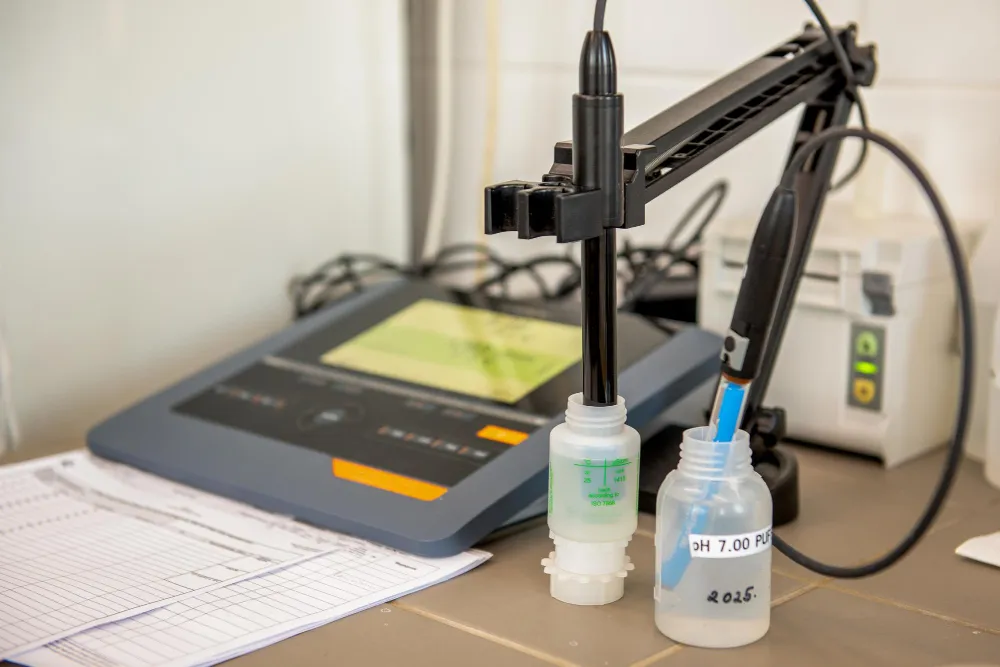
A specialized pH calibration solution serves as the definitive reference point for adjusting digital measurement instruments. These fluids possess a highly stable, predetermined resistance to chemical changes, allowing users to verify if their machinery reads correctly.
If your digital display shows a variance from the liquid’s known value, you can adjust the machine back to true accuracy.
Because temperature changes alter chemical values, these reference fluids are formulated to maintain known values at specific thermal points. Utilizing an exact calibration solution regularly removes the guesswork from your chemical analysis, giving your technical team complete confidence in their final data.
How to Prepare Your Testing Area
Achieving exact calibration depends heavily on the cleanliness of your testing environment. Contamination is the leading cause of calibration errors in industrial settings.
- Clean all glass beakers with deionized water before you start the process.
- Ensure the testing environment maintains a stable room temperature.
- Inspect the digital meter probe for any visible cracks or debris.
- Gather samples of your reference fluids instead of reusing old ones.
- Dry the electrode gently with paper towels that do not leave lint between each test phase.
Selecting the Right pH Buffer Solution for Your Targets
Different industrial applications require specific testing ranges to achieve correct measurements. A standard pH buffer solution is color-coded so technicians can quickly identify the exact value of each batch. Most facilities use a technical kit containing values of four, seven, and ten.
The values you select must bracket the expected levels of the liquids you test daily. Using the correct pH buffer solution ensures your digital meter gives precise results for either highly acidic or strongly alkaline mixtures.
The Importance of a Reliable Buffer Solution for pH Meter Adjustments
Choosing a dedicated buffer solution for pH meter testing allows laboratories to establish a highly reliable multi-point calibration curve. Most modern testing systems utilize a two-point or three-point verification process to guarantee linear accuracy across varying chemical levels.
By testing with a neutral, an acidic, and an alkaline reference liquid, you ensure the device reads perfectly across the whole spectrum. Without utilizing a proper buffer solution testing, a digital meter might only read accurately at a single point while failing at higher or lower values.
This systematic verification creates a dependable baseline that guarantees your instrumentation functions correctly under real-world testing pressures.
Step-by-Step Multi-Point Calibration Method
To maximize the precision of your machinery, your technical staff should follow a strict, standardized testing process every single morning.
- Rinse the Electrode: Clean the testing probe thoroughly using pure deionized water to remove residual storage salts.
- Test the Neutral Baseline: Submerge the clean probe into a neutral value seven reference liquid first to find the zero point offset.
- Adjust the Settings: Allow the digital reading to stabilize completely before adjusting the meter interface to match the liquid value.
- Test the Acidic or Alkaline Limit: Rinse the probe again, then submerge it into a value four or value ten liquid depending on your typical operational needs.
- Record the Final Slope: Save the calibrated settings on your digital device and log the final efficiency slope for future quality audits.
Finding a Trustworthy Buffer Solutions Supplier
For operations located in major industrial hubs, sourcing highly stable testing chemical supplies locally is vital for continuous operational success. Partnering with a dedicated buffer solutions supplier in Dubai guarantees that your facility receives fresh, certified testing compounds that meet strict global standards.
Local sourcing also prevents long transit delays, ensuring your sensitive chemicals are not exposed to extreme shipping temperatures that degrade quality.
Conclusion
Achieving absolute precision in your daily chemical operations requires top-tier tools and a highly disciplined testing routine. Utilizing a verified pH buffer solution eliminates measurement uncertainties, ensuring your industrial processes run smoothly without unexpected disruptions.
For businesses requiring dependable, world-class testing assets, Innoveda Chemicals provides premium chemical products designed to maintain your laboratory standards perfectly.
Frequently Asked Questions
How often should I use a pH buffer solution to calibrate my machinery?
You should use a fresh pH buffer solution to calibrate your equipment daily, or before every new testing session, to eliminate electronic drift and ensure continuous data accuracy.
What makes a pH calibration solution stable against temperature changes?
A certified pH calibration solution contains balanced chemical pairs that naturally resist shifts in hydrogen ion concentration, though you must still adjust your meter for ambient temperature values.
Can I reuse a buffer solution for pH meter testing multiple times?
No, you must never reuse a buffer solution for pH meter adjustment because airborne exposure and probe contact introduce immediate cross-contamination that alters the fluid’s exact value.
How should laboratory technicians handle contaminated reference fluids safely?
Contaminated fluids must be disposed of immediately according to local environmental regulations, and technicians should thoroughly clean all containment vessels before opening fresh testing supplies.
What is the typical shelf life of unopened chemical testing fluids?
Unopened bottles generally last for approximately one to two years from the manufacture date, but alkaline varieties degrade much faster once the airtight seal is broken.