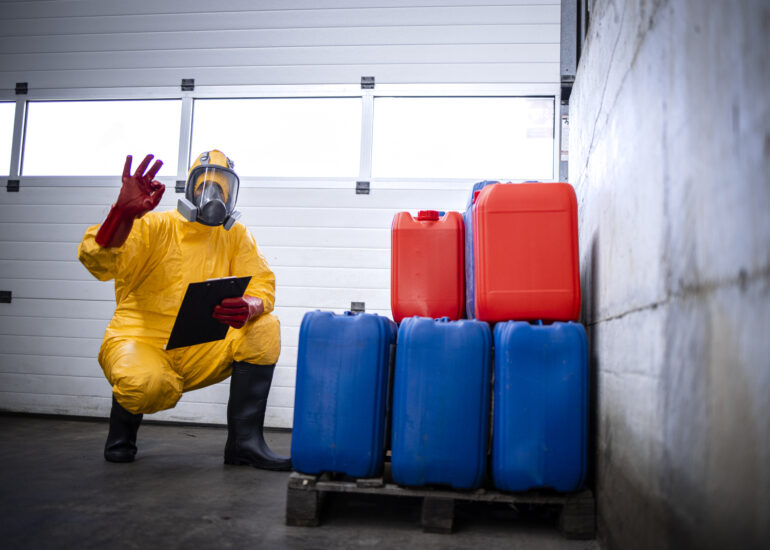

Ever checked the label on your cough syrup and wondered why propylene glycol is on the list? It is a pharmaceutical excipient, an inactive ingredient that helps the active drug dissolve, stay stable, and work as intended. That is the main role of propylene glycol in medicine: it does not treat the illness itself, but many syrups, creams, and injectable medicines would not work well without it.
In this blog, you will learn how it works, where it is used, and how to choose a reliable supplier in the UAE.
What Is Propylene Glycol in Medicine?
Propylene glycol (PG) is a clear, colorless, slightly sweet liquid with almost no odor. It mixes easily with water and many other solvents, and it attracts moisture from the air.
In medicine, PG is used in pharmaceutical grade (USP or EP). This grade is far purer than industrial grade and is made under strict quality controls. It does not treat any illness itself. Its job is to help the active ingredient dissolve, stay stable, and reach the body properly.
Why Is Propylene Glycol Used in Pharmaceutical Formulations?
Many active ingredients do not dissolve well in water. Without help, a drug may settle at the bottom of a bottle, break down quickly, or not be absorbed properly. Propylene glycol in pharmaceutical formulations solves several of these problems at once:
- It dissolves drugs that water cannot.
- It keeps liquid medicines clear and evenly mixed.
- It holds moisture, so creams and gels do not dry out.
- It supports preservatives, helping protect products from microbial growth.
- It is low in cost and widely available.
Propylene Glycol as a Pharmaceutical Excipient
As a pharmaceutical excipient, PG is valued because it is versatile. One ingredient can act as a solvent, humectant, stabilizer, and carrier, which keeps formulas simpler.
Regulators in many regions accept it for oral, topical, and injectable products within set limits. Formulators still follow pharmacopoeia standards and check each batch for purity before use.
How Does Propylene Glycol Work as a Pharmaceutical Solvent?
It is what allows another substance to dissolve in it and form a uniform liquid. PG has both water-loving and oil-loving properties, so it can dissolve a wide range of active ingredients.
Think of it as a bridge. A drug that refuses to mix with water can often dissolve in PG, and the PG then blends smoothly with water. This gives a clear, uniform liquid, so every dose carries the same amount of medicine.
This is especially useful in:
- Oral liquids: keeps the drug evenly dispersed in each spoonful.
- Injectable medicines: helps poorly soluble drugs stay in solution.
- Topical products: delivers the active ingredient to the skin.
Applications of Propylene Glycol in Oral and Topical Medicines
PG appears in many dosage forms. The table below gives a quick view.
| Dosage Form | Role of Propylene Glycol | Common Examples |
| Oral syrups and solutions | Solvent, stabilizer | Cough syrups, vitamin drops |
| Capsules (soft gel) | Solvent, plasticizer | Liquid-filled capsules |
| Creams and ointments | Humectant, solvent | Skin and wound care products |
| Gels and lotions | Penetration enhancer | Pain relief and anti-fungal gels |
| Injectables | Co-solvent | Certain sedatives and anticonvulsants |
Propylene Glycol in Oral Medications
In oral medicines, PG keeps the active ingredient dissolved so the dose is accurate. It also improves the taste of some liquids by helping dissolve flavoring agents. Pediatric drops and syrups often rely on it for this reason.
Because it is taken by mouth, purity matters. Only pharma-grade PG with proper documentation should be used, and manufacturers follow recommended limits, especially for products meant for infants.
Propylene Glycol in Topical Formulations
In creams, gels, and ointments, PG works as a humectant. It draws water into the product and the upper skin layer, keeping the skin soft and the product smooth.
It can also act as a penetration enhancer. This means it helps the active ingredient move through the outer skin layer so it can work where it is needed. Mild irritation is possible in people with very sensitive skin, so formulators choose the concentration carefully.
Key Benefits of Propylene Glycol in Pharmaceutical Formulations
| Benefit | Why It Matters |
| Strong solvency | Dissolves hard-to-mix drugs |
| Stability | Helps keep products consistent over their shelf life |
| Moisture retention | Prevents drying in creams and gels |
| Compatibility | Works with many active ingredients and excipients |
| Safety record | Long history of use within regulated limfits |
| Cost efficiency | One ingredient does several jobs |
Safety deserves a note. PG is considered safe at regulated levels, and you can read its chemical and safety data on PubChem. Very high doses, or use in newborns and patients with kidney problems, need medical supervision.
How to Choose a Propylene Glycol Supplier in the UAE
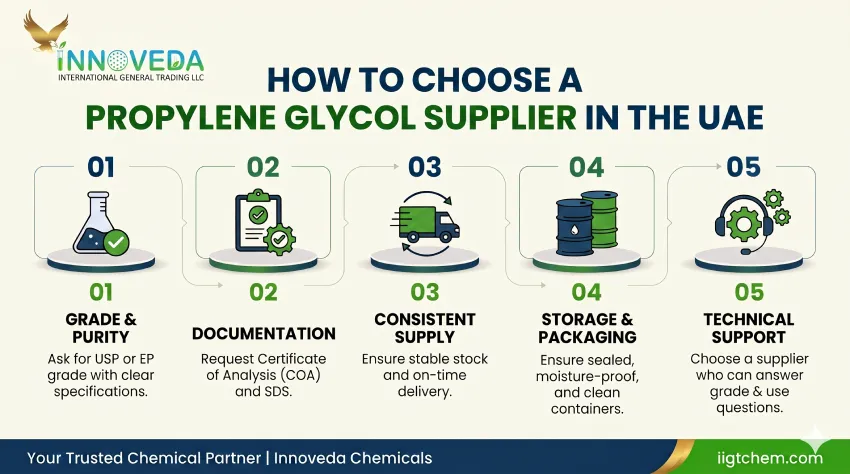
Your product is only as good as your raw material. When you look for a mono propylene glycol supplier in UAE, check these points:
- Grade and purity: Ask for USP or EP grade with a clear specification.
- Documentation: Request a Certificate of Analysis (COA), Safety Data Sheet (SDS), and batch traceability.
- Consistent supply: Stable stock and on-time delivery keep your production running.
- Proper storage and packaging: PG absorbs moisture, so sealed, clean containers matter.
- Technical support: A good supplier can answer questions about grade and use.
Innoveda Chemicals (Innoveda International General Trading) is a certified chemical supplier in the UAE. It serves industries including food, oil refining, oil drilling, and water and sewage treatment in Dubai, offering both raw materials and consumer products. For pharma-grade needs, confirm the exact grade and documents before ordering.
Conclusion
Propylene glycol in medicine may look like a minor component, but it does essential work. As a pharmaceutical excipient, it dissolves drugs, keeps formulas stable, and improves how oral and topical medicines perform. Using it correctly depends on two things: following approved limits and sourcing pure, well-documented material.
If you are sourcing for your business, work with a trusted partner. Innoveda Chemicals can help you find the right grade for your needs.
Frequently Asked Questions
1. Why is propylene glycol added to medicines?
It helps dissolve the active drug, keeps the formula stable, and holds moisture in products such as syrups, capsules, creams, gels, and some injectables.
2. Is propylene glycol safe in pharmaceutical products?
Yes, within regulated limits. Care is needed for newborns, people with kidney problems, and very high doses.
3. Why is propylene glycol called a pharmaceutical excipient?
Because it is an inactive ingredient. It does not treat the condition but helps deliver and protect the active drug.
4. What is the difference between pharma-grade and industrial-grade propylene glycol?
Pharma grade (USP or EP) has higher purity and strict quality testing. Industrial grade is not suitable for medicines.
5. What should I check before buying from a propylene glycol supplier in the UAE?
Check the grade, COA, SDS, batch traceability, packaging, and the supplier’s delivery record.