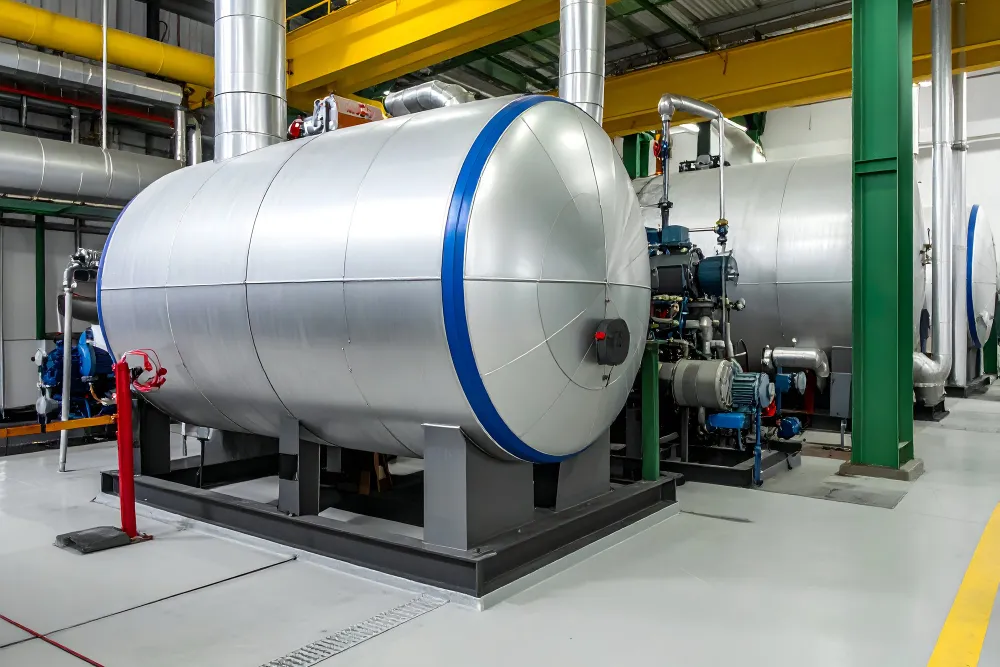
Did you know that unseen oxygen causes over 60 percent of sudden industrial boiler failures worldwide? Dissolved gas eats through inner pipe walls, causing system leaks and costly production delays.
Using a high-quality boiler corrosion inhibitor stops internal metal decay before it ruins your heating equipment. Proper chemical treatment removes harmful gases, balances pH levels, and keeps your system working smoothly.
What Is a Boiler Corrosion Inhibitor?
A boiler corrosion inhibitor is a special chemical added to water systems to stop metal destruction. High operational heat accelerates rust formation on unprotected steel walls. Adding chemical treatment forms a thin protective layer along pipe walls, neutralizing corrosive agents before they destroy equipment.
Thermal plants rely on these speciality products to maintain steady heat transfer. Preventing internal metal decay lowers annual repair bills, stops fuel waste, and protects your plant against sudden pressure drops.
Understanding Boiler Feed Water Treatment
Raw water has mineral salts and gases that can affect the high-pressure steam lines. Boiler feed water treatment ensures the removal of raw minerals and maintenance of alkalinity in the incoming water.
Benefits of Boiler Feed Water Treatment
Complete boiler feed water treatment protects your plant from expensive breakdowns and high fuel costs.
- Scale Inhibitor: Prevents heavy deposits of minerals from forming on the heat exchanger tube surfaces.
- Corrosion Resistance: Neutralizes any aggressive acidic substances prior to contacting internal metal walls.
- 100% Pure Steam Production: Prevents entrainment of water in the steam line.
- Lower Energy Bills: Maintains clean heat surfaces, reducing daily fuel consumption.
Effective boiler feed water treatment mixes softeners, filtration units, and precise chemical dosing to deliver clean water into steam loops.
The Role of Oxygen Control Chemical Formulations
Dissolved oxygen is the top cause of metal pitting inside high-pressure steam units. Using a dedicated oxygen control chemical neutralizes dissolved oxygen molecules in water, turning them into harmless compounds before they react with hot iron.
Protection from Oxygen Control Chemical Use
When cold water enters a hot heating loop, dissolved oxygen breaks free and attacks vulnerable metal parts. Left untreated, this gas creates concentrated deep pits in steel tubes. Applying an effective oxygen control chemical removes gas bubbles, maintaining balanced water chemistry and stopping pitting completely.
Essential Types of Boiler Corrosion Control Chemicals
Industrial plants use several distinct boiler corrosion control chemicals to shield internal steel components from chemical decay. Each chemical type targets a specific problem inside the fluid loop.
| Chemical Type | Main Function | Key Facility Benefit |
| Oxygen Scavengers | Remove dissolved O2 molecules | Prevents deep metal pitting in feed lines |
| Alkalinity Boosters | Maintain optimal pH balance (10.0–11.5) | Stops acidic metal dissolution |
| Filming Amines | Form protective microscopic barrier | Shields condensate return lines from rust |
| Sludge Conditioners | Keep suspended solids loose | Prevents heavy mud accumulation on drum floors |
Functions of Boiler Corrosion Control Chemicals
Applying the right boiler corrosion control chemicals ensures full protection across every section of your heating system. Using these boiler corrosion control chemicals stops scale accumulation and stabilizes pH levels during heavy operating cycles.
Mechanics of Internal Metal Damage
Understanding how internal metal decay occurs helps facility managers choose appropriate chemical solutions. When dissolved oxygen enters hot fluid loops, it attaches to iron surfaces, creating localized reaction zones.
These tiny zones dissolve rapidly, digging deep pinholes through thick steel walls. Over time, these concentrated pinholes cause sudden pipe bursts under normal operating pressure.
Daily Testing and Dosing Best Practices
Consistent chemical dosing maintains peak system defense without wasting expensive products.
Analyze Incoming Water Quality: Water Testing.
Test incoming feed water daily to monitor oxygen content, hardness, alkalinity, and pH levels before chemical injection.
Calibrate Chemical Dosing Pumps: Automated Injection.
Set up automated chemical dosing pumps on storage tank feed lines to deliver steady, accurate chemical volumes.
Check Reserve Chemical Levels: System Sampling.
Draw water samples from the main boiler drum daily to confirm proper chemical reserve concentrations remain active.
Perform Regular Bottom Blowdown: Blowdown Routine.
Open blowdown valves periodically to purge settled sludge, heavy dissolved solids, and concentrated mineral deposits safely.
Using automated monitoring systems ensures your equipment stays protected around the clock, eliminating human error in manual testing.
Working with an Oxygen Control Supplier
Choosing a reliable oxygen control supplier in Dubai gives local industrial plants access to high-grade chemicals, expert water testing, and custom dosing plans. Regional specialists evaluate your water quality, recommend ideal chemical ratios, and provide technical support to keep systems running smoothly.
Conclusion
Protecting industrial heating systems against rust and metal decay requires a well-planned chemical maintenance strategy. Applying a high-grade boiler corrosion inhibitor neutralizes aggressive dissolved gases, maintains stable pH balances, and keeps your entire steam loop operating efficiently.
Partnering with technical experts like Innoveda Chemicals ensures your plant receives premier chemical products, custom water analysis, and dedicated technical support.
Frequently Asked Questions
1. What is the purpose of a boiler corrosion inhibitor in industries?
A boiler corrosion inhibitor counteracts dissolved gases and maintains water pH, thus stopping rust formation, deep pinholing, pitting, and pipe leakage in steam systems.
2. How do oxygen control chemicals protect boiler pipes?
Oxygen control chemicals react with dissolved oxygen molecules in water, transforming them into non-corrosive substances before they can eat through steel pipes.
3. What could happen when boiler feed water treatment is not done?
Without proper treatment of boiler feed water, scaling, metal corrosion, pipe leaks, high cost of fuel usage, and unanticipated plant shutdowns occur.
4. How often should corrosion control chemicals be tested in boilers?
Water samples should be tested on a daily basis for the reserves of chemicals, pH balance, and total dissolved solids.
5. What are the indications of oxygen damage internally in the boiler?
There may be unexpected pinhole pipe leaks, reddish-brown iron rust in condensate lines, and high iron in water samples.