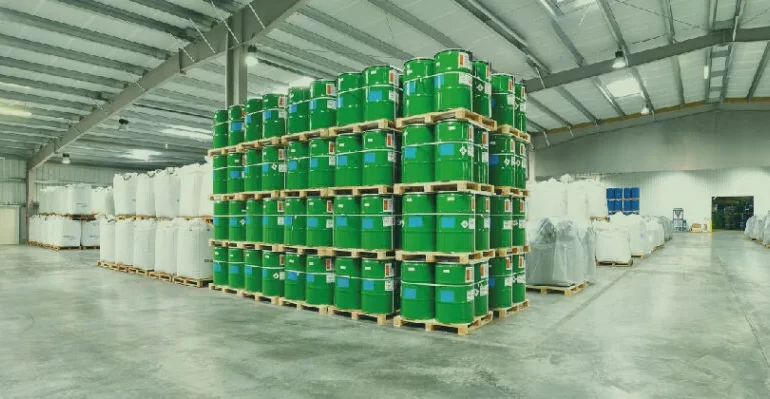
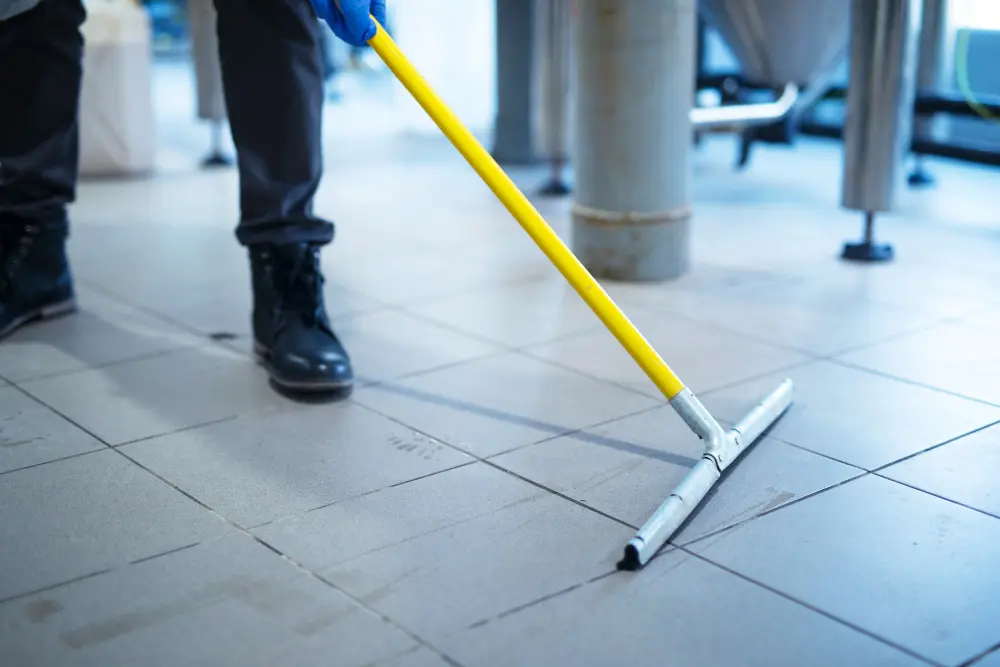
A warehouse floor streaked with tyre marks. A commercial kitchen with grease worked deep into the grout. A newly finished building still clouded with cement haze. Each one looks like a dirty-tile problem, yet each needs a different chemical to solve it.
Pick the wrong product and you can spend hours scrubbing with little to show for it. Worse, you can dull a glaze, etch stone or weaken grout. This guide explains how to match tile cleaning chemicals to the stain, the surface and the conditions on site, so facility managers and cleaning teams in the UAE can choose with confidence.
Why One Cleaner Can’t Handle Every Stain
Tile stains fall into a few broad groups, and the chemistry that removes one often does nothing for another.
- Mineral deposits: limescale, water marks, cement and grout haze, efflorescence and some rust marks. These usually respond to acidic cleaners.
- Oil and grease: cooking fats, machine oil, hydraulic fluid and tyre residue. These need an alkaline cleaner or degreaser that breaks down fatty soils.
- Everyday soil: dust, sand and foot-traffic grime, normally handled by a neutral or mildly alkaline cleaner.
Most tile cleaning chemicals are designed with one of these groups in mind, so start by identifying the stain. Location gives useful clues. White crusts around drains, taps and grout lines usually point to minerals, while dark, sticky patches near machinery or cooking areas point to grease.
Acidic Cleaners vs General Tile Cleaners
General-purpose tile cleaners are usually neutral or alkaline. They are made for regular cleaning and greasy soils, and they are gentler on most surfaces.
Acidic cleaners work differently. They dissolve mineral deposits that alkaline products can’t shift, which makes them useful for descaling and post-construction cleaning. The trade-off is that they are less forgiving. Acids react with calcium-based materials, so they can etch some natural stones and wear down cement-based grout.
When Is a Tiles Cleaner Acid the Right Choice?
Do use it for:
- Cement or grout haze after tiling work
- Limescale and water marks in washrooms and around drains
- Efflorescence (white powdery deposits on tiles and grout)
Don’t use it on:
- Marble, limestone, travertine or other calcium-based stone
- Terrazzo containing marble chips
- Oil and grease stains (use a degreaser instead)
- Any tile whose manufacturer advises against acidic cleaners
Before you start:
- Confirm the tile type and the manufacturer’s cleaning guidance
- Wet cement grout with clean water first, as many manufacturers recommend
- Test the product on a small, hidden area
Match the Chemical to the Tile Surface
The tile narrows your options before the stain does.
Glazed ceramic and porcelain generally tolerate a wide range of cleaners, including many acidic products. Unglazed, matte and textured tiles can be more porous, so dirt and residue sit deeper. Natural stone needs the most care, and many stone types are best maintained with a pH-neutral cleaner.
The finish matters as well. Polished, metallic and decorative glazes can dull or discolour under strong chemicals. If you’re unsure, check the tile manufacturer’s cleaning guidance and test the product on a small, hidden area first.
Cleaning Industrial Floors and High-Traffic Areas
Warehouses, workshops, car parks and commercial kitchens deal with heavier soiling than offices or homes. A few factors deserve extra attention.
- Slip resistance: Anti-slip tiles have textured surfaces that hold onto dirt. Leftover chemical residue can also make floors slippery, so thorough rinsing matters.
- Machine compatibility: If your team uses scrubber-driers, low-foaming products are usually preferred. Check the machine manufacturer’s guidance.
- Heat: In hot, outdoor or well-ventilated areas, cleaning solutions can dry on the surface quickly. Work in smaller sections so the product doesn’t dry before you rinse.
- Downtime: Choose products whose instructions fit your schedule, including drying time before the area reopens.
For routine upkeep, a neutral or alkaline cleaner usually does most of the work. Keep stronger chemicals for specific problems rather than daily use.
How to Find the Best Chemical for Cleaning Tiles on Your Site
There is no single best chemical for cleaning tiles. The right one is whatever suits your stain, your surface and your site. Before you buy, work through these questions:
- What is the stain: minerals, grease or general soil?
- What is the tile, and does its manufacturer rule out certain cleaners?
- What type of grout is used?
- Is this a one-off deep clean or routine maintenance?
- Does the product come with clear instructions and a safety data sheet (SDS)?
For stubborn marks, it also helps to read our guide to practical methods to remove stains from tiles before settling on a chemical.
Safe Handling, Dilution and Rinsing
Strong tile cleaners can irritate or harm skin, eyes and airways if they are used carelessly. The product label and SDS are your reference points.
Do:
- Dilute exactly as the label directs
- Wear the protective equipment listed in the SDS, such as gloves and eye protection
- Ventilate the area, especially washrooms and enclosed spaces
- Rinse thoroughly with clean water and follow any neutralising step in the instructions
- Store chemicals as the SDS directs, in their original labelled containers
Don’t:
- Mix products: acidic cleaners combined with bleach can release toxic chlorine gas
- Assume a stronger mix works better, as it can damage the surface
- Use a product without reading its label and SDS first
Common Mistakes to Avoid
- Using acid on marble or other calcium-based stone.
- Treating grease with an acid, or limescale with a degreaser.
- Skipping the patch test on a new surface.
- Leaving the product on longer than the label allows.
- Rinsing poorly and leaving a sticky or slippery film.
- Using an acidic cleaner for daily mopping when a neutral cleaner would do.
Choosing a Supplier and Checking Conformity
The information that comes with a product matters as much as the chemical itself. A dependable supplier should provide clear usage instructions, an SDS and guidance on which surfaces the product suits.
In the UAE, the Ministry of Industry and Advanced Technology (MoIAT) is the federal authority responsible for standardisation and conformity. If conformity forms part of your procurement process, review the MoIAT product conformity standards and ask suppliers for the relevant documentation.
If you are looking for a tile cleaner supplier in uae, you can contact Innoveda Chemicals to request product details, the SDS and surface compatibility guidance before you order.
Conclusion
Choosing tile cleaning chemicals comes down to three things: the stain, the surface and the site. Acidic cleaners deal with mineral deposits but can damage stone and grout. Degreasers handle oil and fat. Neutral cleaners keep floors in good condition day to day.
Read the label, check the SDS, test before you commit and rinse well. Those habits protect the floor, and the people who work on it.
Frequently Asked Questions
1. What are tile cleaning chemicals used for?
They remove soils that water and mopping alone cannot shift, such as limescale, cement haze, grease, oil and ground-in dirt. Different chemicals target different stains, so the product should suit both the stain and the tile surface.
2. Is a tiles cleaner acid safe for all floor tiles?
No. Acidic cleaners can etch marble, limestone, travertine and other calcium-based stone, and they may weaken cement grout. They are generally better suited to glazed ceramic and porcelain, but always check the tile manufacturer’s guidance first.
3. What is the best chemical for cleaning tiles with grease stains?
Grease and oil usually need an alkaline cleaner or degreaser, not an acid. Pick one that suits your tile, use it at the strength the label gives, then rinse well so no slippery film is left behind.
4. Can I mix tile cleaners to make them stronger?
No. Mixing cleaning chemicals can cause dangerous reactions. For example, combining an acidic cleaner with bleach can release toxic chlorine gas. Use one product at a time, rinse well between products and follow the safety data sheet.
5. How do I check whether a tile cleaner suits my floor?
Read the product label and safety data sheet, confirm which tile and grout types it is designed for, and test it on a small, hidden area. If you are still unsure, ask the supplier or tile manufacturer.