
- Paints and Coatings Industry
- Architectural Paints: Acrylic emulsions are extensively used in water-based latex paints for both interior and exterior applications. They provide a smooth finish, excellent durability, and weather resistance.
- Industrial Coatings: Applied on metals, machinery, and equipment, acrylic emulsions form protective coatings that resist corrosion, abrasion, and UV degradation.
- Wood Coatings: Used in varnishes and stains to protect wooden surfaces from moisture, fungi, and UV rays while enhancing the natural appearance.
- Construction Industry
- Waterproofing Compounds: Acrylic emulsions are utilized in waterproofing solutions for roofs, walls, and concrete structures, forming flexible barriers against water penetration.
- Cementitious Coatings: Added to cement mixes or plaster to improve adhesion, flexibility, and resistance to cracking in construction projects.
- Sealants and Primers: Used as a base coat or sealant in various construction applications, providing better adhesion for top coatings and enhancing surface durability.
- Adhesives and Sealants Industry
- Pressure-Sensitive Adhesives (PSAs): Acrylic emulsions are used to make adhesives for tapes, labels, and stickers, providing strong tack and peel properties.
- Water-Based Adhesives: Commonly used in paper, packaging, and woodworking industries, they offer excellent bonding properties while being environmentally friendly.
- Caulks and Sealants: Used in acrylic-based sealants for sealing gaps, joints, and seams in buildings, providing flexibility and resistance to cracking.
- Textiles and Nonwovens Industry
- Fabric Finishes: Acrylic emulsions are applied as binders to improve the hand feel, stiffness, and wash resistance of fabrics. They are also used in coating applications to make textiles water-resistant or flame retardant.
- Nonwoven Binders: Used in nonwoven fabrics, such as medical textiles, hygiene products, and filtration media, to bond fibers together without affecting breathability.
- Paper and Packaging Industry
- Paper Coatings: Acrylic emulsions are applied in coatings to improve the brightness, smoothness, and printability of paper products, such as magazines, labels, and packaging materials.
- Packaging Adhesives: Widely used in adhesives for packaging materials, acrylic emulsions provide strong bonding for cardboard, plastic, and paper substrates.
- Automotive Industry
- Automotive Paints: Used in waterborne automotive paints and coatings for both exterior and interior parts, offering excellent gloss, durability, and resistance to environmental factors like UV rays and chemicals.
- Underbody Coatings and Sealants: Applied to vehicle undercarriages for protection against corrosion, moisture, and road debris.
- Graphic Arts and Printing Industry
- Inks and Varnishes: Acrylic emulsions are used in water-based inks and overprint varnishes for flexographic and gravure printing, providing vibrant colors, good adhesion, and fast drying times.
- Binders for Pigments: Used as binders in the production of pigments and dyes for paints, providing enhanced color retention and stability.
- Leather Industry
- Leather Finishing: Acrylic emulsions are used to coat leather surfaces, providing a smooth, flexible, and durable finish that enhances water resistance and aesthetic appeal.
- Personal Care Products
- Cosmetic Formulations: Acrylic emulsions are sometimes used as film-formers in hair gels, creams, and lotions, providing texture and consistency without greasiness.
- Energy Sector
- Solar Panels and Wind Turbines: Acrylic emulsions are used in protective coatings to enhance the durability and longevity of renewable energy systems by protecting against environmental damage.
- Art Supplies
- Acrylic Paints: Artists use acrylic emulsion-based paints for their quick-drying, vibrant colors, and long-lasting durability. These paints are easy to work with and can be thinned with water or thickened with gels for different textures.
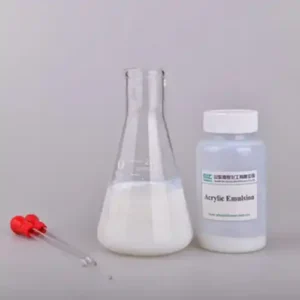 Available Packing

Reviews
There are no reviews yet.