
What if one water-based cleaner could clear oil, grease and carbon in a single wash? That question sits behind the ctc volc cleaner uses covered here. Factory output makes up 13.4% of the UAE’s non-oil GDP, based on early 2025 data.
Plants and ships in this market handle oily tanks and dirty machines every day. Slow cleaning eats time and money. A strong oil residue cleaner cuts wash time and protects surfaces. This blog shows where the product works, how to use it, and what you gain.
What Is CTC Volc Cleaner and What Are CTC Volc Cleaner Uses?
CTC Volc is a water-based cleaner. It breaks oil into tiny drops that mix with water. Those drops then rinse away with ease.
The cleaner also holds loosened dirt in the water. That stops dirt from settling back on clean surfaces. Each wash leaves a cleaner finish.
It has no petroleum-based solvents. It is non-flammable and low in toxins. This matters in closed spaces such as ship tanks, where safety comes first.
The dose is small. The product page lists 0.2 to 0.4 percent in water for cleaning. It comes in 25-litre and 210-litre packs, so small and big jobs both work. The supplier also keeps stock at coastal sites in India and the Middle East.
With the basics clear, let’s look at the jobs it handles.
Main Jobs This Cleaner Handles
The main ctc volc cleaner uses fit a few clear groups. Each one solves a common cleaning problem in tanks and plants.
- Tank cleaning after oil cargo: clears residue from lube oil, gas oil, kerosene and mineral oil.
- Food oil tanks: cleans after vegetable, animal and fish oils.
- Paraffin and phthalate film: lifts waxy, sticky layers from tank walls.
- Baked-on oils: softens dried oil layers so they wash off.
- Carbon and soot: loosens deposits on tanks and parts.
- Gas freeing: helps clear gas fumes from tanks before checks.
- Smell control: cuts strong odours left by smelly products.
- Mixed cleaning: blends with other tank cleaners for extra power.
Tank work sits at the center of most of these jobs, so that is the best place to start.
Why an Oil Residue Cleaner Matters for Tank Work
An oil residue cleaner must lift thick films without harming the surface. This one suits stainless steel, epoxy, phenolic and zinc tank linings. It is also non-corrosive to ferrous metals.
Clearing Tanks After Oil Cargo
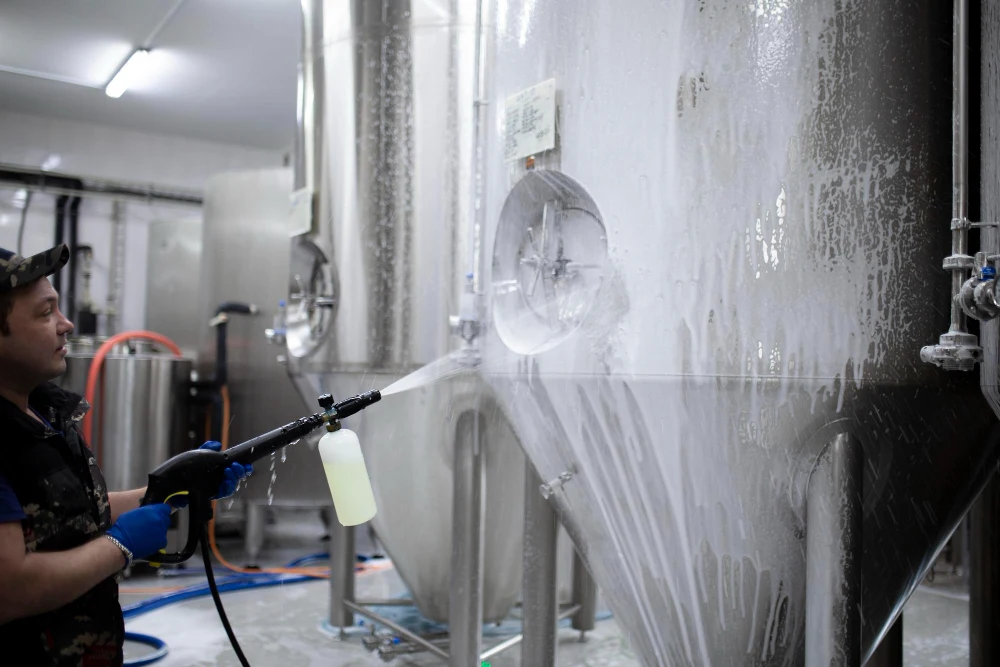
Leftover cargo turns sticky and hard as it ages. Late cleaning then takes more water, time and labour. The cleaner works best when applied early, before the film bakes onto the wall. Spray it on the residue after a rough wash. Let it soften the layer, then use a hot wash to carry the oil away.
Handling Carbon, Soot and Grime
Carbon and soot cling to metal and trap oil beneath them. Wetting agents in the cleaner help it spread into tiny gaps. It loosens the deposits and holds them in the water. That keeps them from landing back on the surface during rinse. You do less rework and run fewer wash cycles.
Using an Oil and Grease Remover on Tough Deposits
Tanks are not the only place with sticky buildup. Machines and parts collect grease too.
An oil and grease remover should work fast and leave no film. This cleaner does that with a small dose in water. It lifts grease, wax and sludge from tanks and parts.
As an oil and grease remover, it also helps with routine upkeep. Crews can use it on dirty surfaces during planned shutdowns. It cuts strong smells in tanks that held smelly products. It also helps clear gas fumes before a check.
Blending adds more power. The cleaner mixes easily with other tank cleaners. It gives a buffer effect with Metal Bright, LAC, Sea-cleaner and alkaline cleaners. The R&D team found that adding Metal Bright or LAC raises cleaning power. It also acts as an acid neutralizer.
Why It Beats Many Solvent Cleaners
Many solvent cleaners are flammable. They can also leave strong fumes in closed tanks. This cleaner is water-based and non-flammable, so risk stays lower.
Cost is another gain. A small dose does the work, so one drum goes a long way. Because it holds dirt in the water, you also avoid repeat washes.
Knowing what it does is half the job. The other half is using it right.
How to Use the Cleaner Step by Step
The product page lists two methods. Pick the one that fits your tank.
Spraying Method
- Flush the system with cold water first.
- Spray the cleaner, as supplied in the drum, onto areas where residue remains after a rough wash.
- Leave it for 10 to 45 minutes. Do not let it dry.
- Wash with warm water at 60°C, using tank cleaning machines at top pressure, for at least three hours.
- Check that no foam remains near the end.
- Inspect the tank. If the result is good, rinse with fresh water and dry.
Loop Method
- Fill the tank with fresh water and heat it to about 50°C.
- Pump the water around through the drop line.
- Add caustic flakes and the cleaner to make a 2.5 percent mix. A range of 2.5 to 4.5 percent is usually enough.
- Keep caustic and heat in check. Too much of either leaves white powder across the tank.
- If there is no drop line, lower Butterworth hoses from the pump stack header into the tank and pump through them.
- Use a strainer at the pump stack.
Common Mistakes to Avoid
Small slips can cut results. Watch for these:
- Letting the sprayed cleaner dry on the surface.
- Skipping the cold water flush at the start.
- Adding too much caustic or too much heat.
- Leaving out the strainer at the pump stack.
- Ending the wash before the foam clears.
Key Benefits for Heavy-Duty Cleaning
Used the right way, the cleaner brings clear gains.
- Strong cleaning power from a small dose.
- Water-based with no petroleum solvents.
- Non-flammable and low in toxins.
- Non-corrosive to ferrous metals and fits all tank coatings.
- Holds dirt in the water so it does not settle back.
- Removes grease, oil, carbon, soil and grime.
- Blends well with other tank cleaners.
- Comes in 25-litre and 210-litre packs.
Safety and Handling Tips
Safety comes first with any chemical. The product page asks users to follow all safety steps when handling or spraying. Read the safety data sheet before use. Wear gloves, goggles and protective clothing. Keep drums closed when idle.
If you are unsure about a surface or a mix, ask the ctc volc cleaner supplier in UAE before you start. This keeps your crew safe and your tanks in good shape.
Conclusion
Now you know the ctc volc cleaner uses and how to run each method. One small dose clears oil, grease and carbon from tanks and parts. It is water-based, low in toxins and kind to tank linings. Need a ctc volc cleaner supplier? Contact Innoveda Chemicals.
Frequently Asked Questions
1. What are the main ctc volc cleaner uses?
It cleans tanks after lube oil, gas oil, kerosene, vegetable oil and paraffin cargo. It also removes carbon, soot and grime, helps clear gas fumes, and cuts strong smells.
2. Where are ctc volc cleaner uses most common?
Ship tank cleaning and marine upkeep top the list. Plants that store oils, waxes or paraffins also use it on tanks and machines.
3. Is this cleaner safe for tank linings?
Yes. As an oil residue cleaner, it suits stainless steel, epoxy, phenolic and zinc linings. It is also non-corrosive to ferrous metals, so tank walls stay protected.
4. Can it clean grease from machines?
Yes. It works as an oil and grease remover for oil, grease, wax, sludge and carbon. Its wetting agents help it spread and hold dirt in the water.
5. What dose should I use?
The product page lists 0.2 to 0.4 percent in water for cleaning. In the loop method with caustic, a 2.5 to 4.5 percent mix usually works. Check the label first.


