
- Construction and Road Maintenance: Calcium chloride is often used for dust control on unpaved roads and as a de-icing agent to melt ice on roads and sidewalks. Its hygroscopic nature helps it attract moisture, making it effective in these applications.
- Agriculture: It is used to improve soil structure and as a supplement in animal feed.
- Food Industry: Calcium chloride is used as a firming agent in canned vegetables and cheese production, and as a preservative in some food products.
- Chemical Industry: It is used as a drying agent in various chemical processes and as a reactant in the production of other chemicals.
- Water Treatment: Calcium chloride is used to increase the hardness of water in various water treatment processes.
- Oil and Gas Industry: It is used in drilling fluids to control the density and viscosity of the fluids.

Calcium Chloride 77%, 94%
Calcium chloride is an inorganic compound, a salt with the chemical formula CaCl2. It is a white crystalline solid at room temperature, and it is highly soluble in water. It can be created by neutralising hydrochloric acid with calcium hydroxide.
Calcium chloride is commonly encountered as a hydrated solid with generic formula CaCl2·nH2O, where n = 0, 1, 2, 4, and 6. These compounds are mainly used for de-icing and dust control. Because the anhydrous salt is hygroscopic and deliquescent, it is used as a desiccant.
Calcium chloride is commonly used in various industries due to its versatile properties. The percentages you mentioned, 77% and 94%, usually refer to the concentration of calcium chloride in a solution or the purity of the solid form. Here are some typical uses for calcium chloride in different industries:
| Chemical formula | CaCl2 |
| Molar mass | 110.98 g·mol-1 |
| Appearance | White hygroscopic powder |
| Odor | Odorless |
| Density | 2.15 g/cm3 (anhydrous) |
| 2.24 g/cm3 (monohydrate) | |
| 1.85 g/cm3 (dihydrate) | |
| 1.83 g/cm3 (tetrahydrate) | |
| 1.71 g/cm3 (hexahydrate)[1] | |
| Melting point | 772–775 °C (1,422–1,427 °F; 1,045–1,048 K) |
| anhydrous[5] | |
| 260 °C (500 °F; 533 K) | |
| monohydrate, decomposes | |
| 175 °C (347 °F; 448 K) | |
| dihydrate, decomposes | |
| 45.5 °C (113.9 °F; 318.6 K) | |
| tetrahydrate, decomposes[5] | |
| 30 °C (86 °F; 303 K) | |
| hexahydrate, decomposes[1] | |
| Boiling point | 1,935 °C (3,515 °F; 2,208 K) anhydrous[1] |
| Solubility in water | Anhydrous: |
| 74.5 g/100 mL (20 °C)[2] | |
| Hexahydrate: | |
| 49.4 g/100 mL (-25 °C) | |
| 59.5 g/100 mL (0 °C) | |
| 65 g/100 mL (10 °C) | |
| 81.1 g/100 mL (25 °C)[1] | |
| 102.2 g/100 mL (30.2 °C) | |
| a-Tetrahydrate: | |
| 90.8 g/100 mL (20 °C) | |
| 114.4 g/100 mL (40 °C) | |
| Dihydrate: | |
| 134.5 g/100 mL (60 °C) | |
| 152.4 g/100 mL (100 °C)[3] | |
| Solubility | Soluble in acetic acid, alcohols |
| Insoluble in liquid ammonia, | |
| dimethyl sulfoxide (DMSO), | |
| ethyl acetate | |
| Solubility in ethanol | 18.3 g/100 g (0 °C) |
| 25.8 g/100 g (20 °C) | |
| 35.3 g/100 g (40 °C) | |
| 56.2 g/100 g (70 °C)[4] | |
| Solubility in methanol | 21.8 g/100 g (0 °C) |
| 29.2 g/100 g (20 °C) | |
| 38.5 g/100 g (40 °C)[4] | |
| Solubility in acetone | 0.1 g/kg (20 °C)[4] |
| Solubility in pyridine | 16.6 g/kg[4] |
| Acidity (pKa) | 8–9 (anhydrous) |
| 6.5–8.0 (hexahydrate) | |
| Magnetic susceptibility (?) | -5.47·10-5 cm3/mol[1] |
| Refractive index (nD) | 1.52 |
| Viscosity | 3.34 cP (787 °C) |
| 1.44 cP (967 °C)[4] |
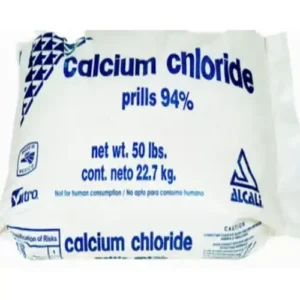
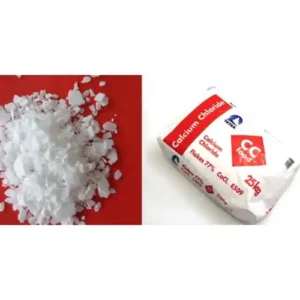
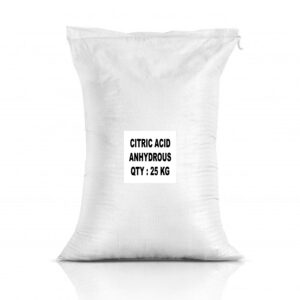
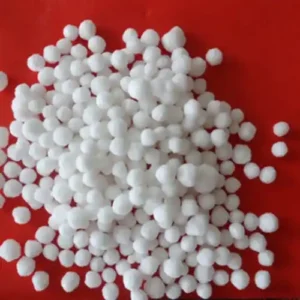 Available Packing
- 25KG PP Bags
- 1000 KG Jumbo Bags

Reviews
There are no reviews yet.